


Wellcare Laboratories - ONKİM Stem Cell Cord Blood Bank Collaboration
Wellcare Laboratories Ltd and ONKİM Stem Cell Technologies (ONKİM) have had a cooperation agreement since 2022, and services have been provided on behalf of Onkim within our laboratory in the TRNC since then. Through this agreement, the aim is to raise stem cell services in the country to the highest level within the framework of scientific and ethical values, and to ensure that a reliable and reputable service is delivered by applying the most advanced technological standards.
ONKİM is a healthcare company established in Turkey in accordance with the existing organ and tissue transplantation law, the blood and blood products law, and the regulations issued by the Ministry of Health.
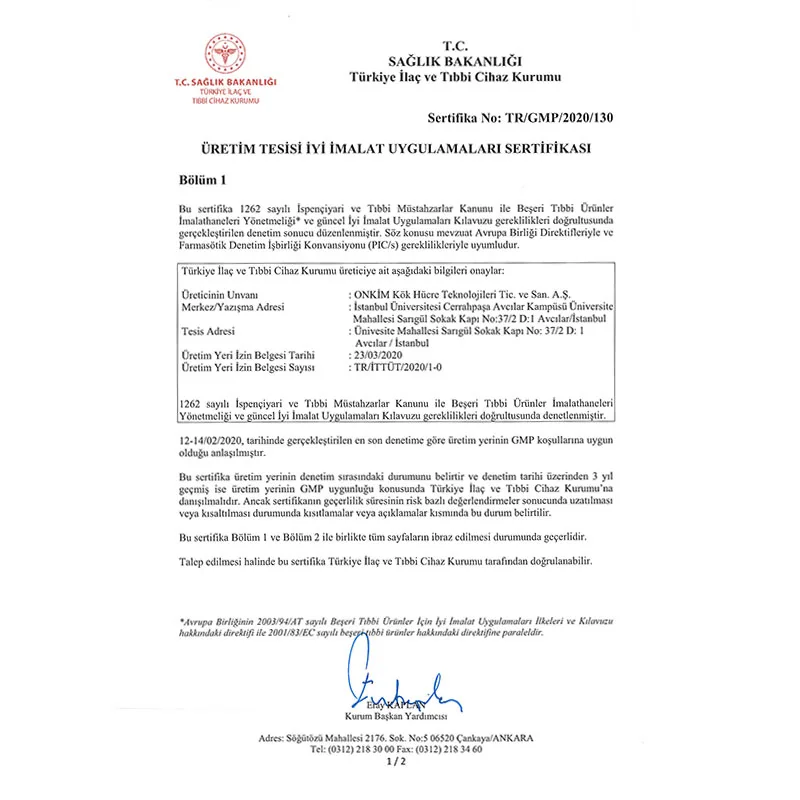
ONKİM is a centre that provides services under GMP (Good Manufacturing Practice) conditions for obtaining stem cells from umbilical cord blood, storing and processing them, and making them ready for use in treatment when needed. It began operating in 2006.
It has a storage and production centre competent to provide R&D support to national and international organisations, located on the Ayazağa campus of Istanbul Technical University. With its long-established staff and medical infrastructure, its GMP conditions and its R&D work, ONKİM guarantees the delivery of assured products for many years to come.
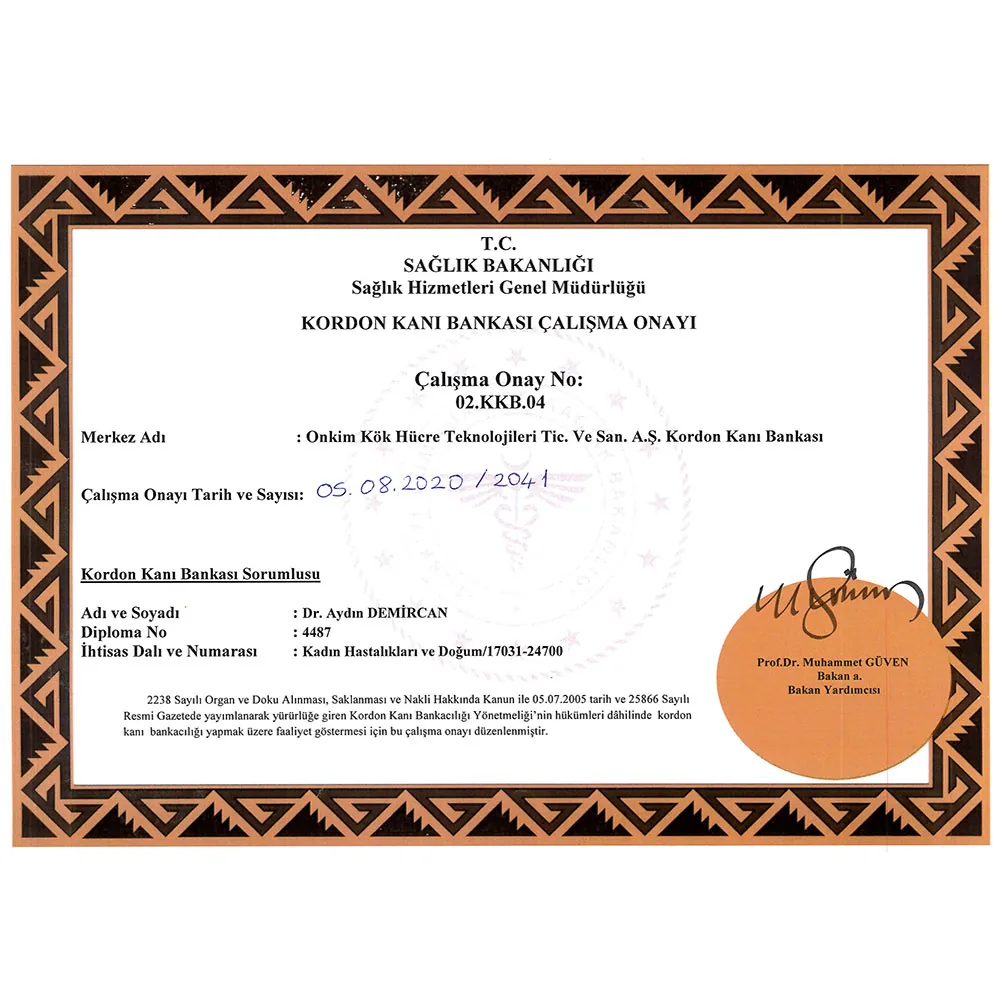
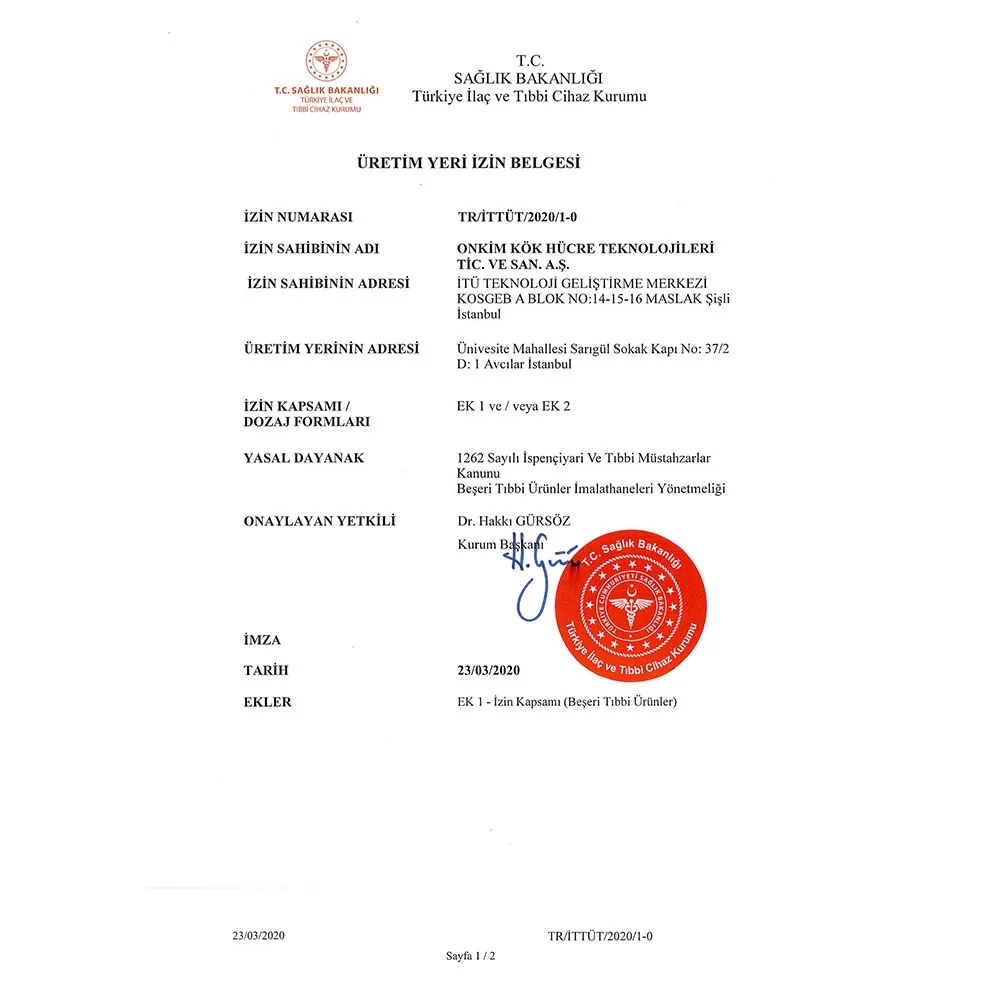
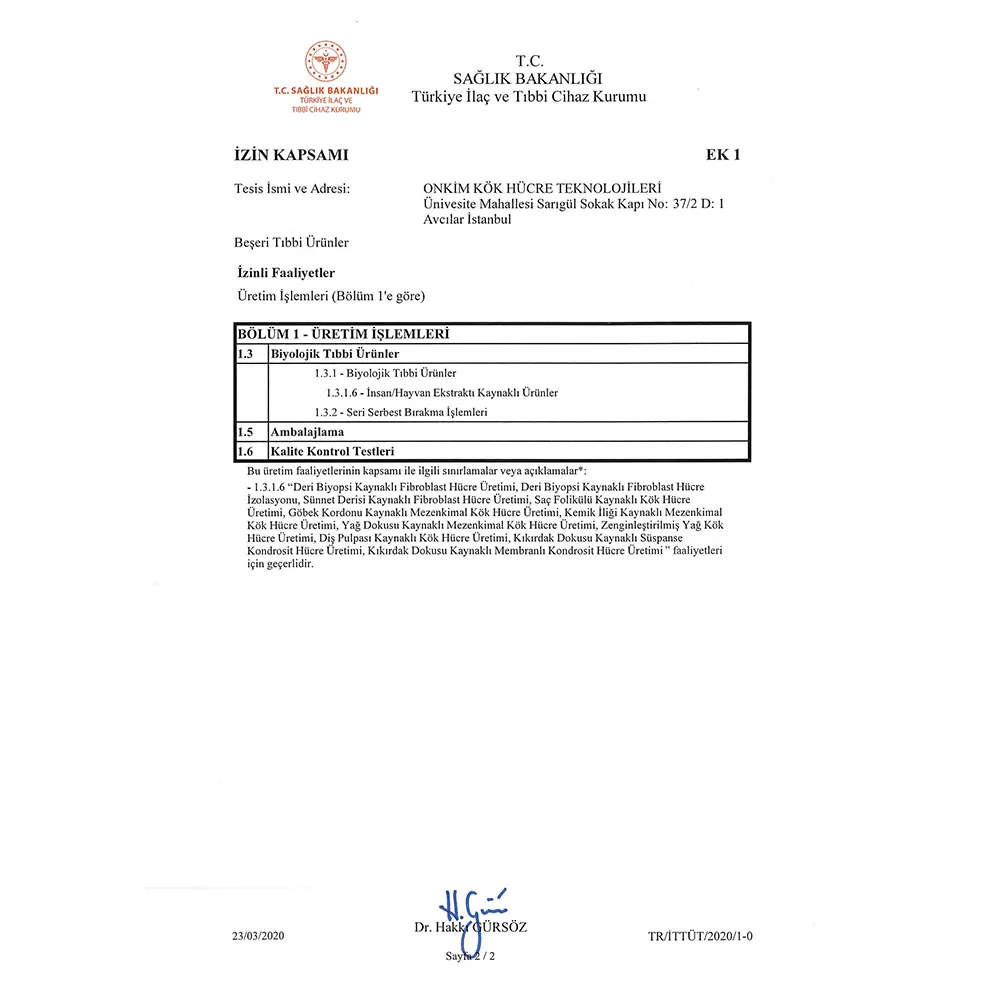
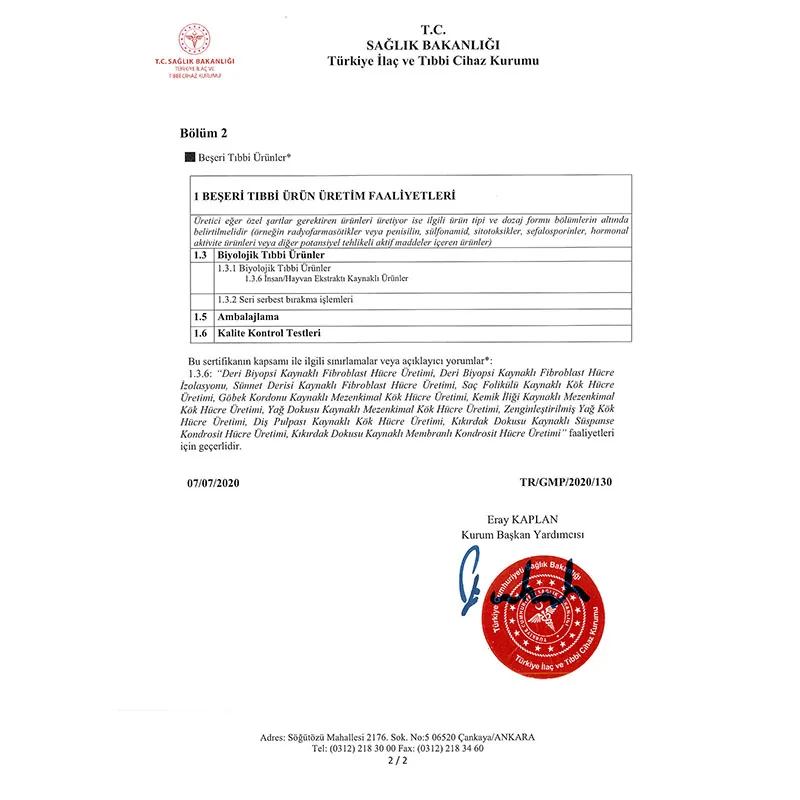
Following the latest technological and scientific developments, ONKİM processes and stores cord blood with experienced staff. With families who have decided to store cord blood, it signs the consent form, the information form and the cord blood contract in the TRNC in cooperation with Wellcare Laboratories. In addition, ONKİM STEM CELL TECHNOLOGIES has completed the Turkish Ministry of Health inspections for Umbilical Cord Storage and the Production of Mesenchymal Stem Cells from the Umbilical Cord, and has been granted an operating licence.
GMP STANDARD
GMP (Good Manufacturing Process) stands for Good Manufacturing Practice.
Every product manufactured for human health must have a high level of quality at every stage of its production and application. GMP comprises the protective measures to be taken to prevent or reduce the possibility of the product being contaminated from internal and external sources. Under decisions that began as recommendations and have in recent years been made mandatory by the USA and the member states of the European Union (EU), it has been stipulated that all kinds of food and health products must be manufactured under GMP conditions. In Turkey, this set of rules has been officially adopted by the Ministry of Health and its application has been made mandatory.
Cord blood containing stem cells is stored in the bank and, if it needs to be used for treatment, is sent by the bank to the treating specialist. For the physician to use the blood sent, he or she must trust the standards of the bank where the blood has been stored. For this reason, the certificates the bank has obtained from international organisations are also extremely important. The most important of these certificates is GMP, i.e. “Good Manufacturing Practice”. Abroad, no physician will use blood stored at an institution that does not hold this certificate.
By law, cord blood and stem cells that are obtained must be stored within the country’s borders, and the bank storing them must hold a licence and be under the supervision of the Turkish Ministry of Health. ONKİM Stem Cell Technologies Inc. is a Demet SABANCI ÇETİNDOĞAN company, competent to provide R&D to national and international organisations, and holds all of the certificates mentioned.

ONKİM has GMP laboratories equipped with the latest systems required for the storage and processing of cord blood and cord tissue.

Licences and Certificates
ONKİM Stem Cell Technologies is licensed by the Turkish Ministry of Health for the storage of cord blood and umbilical cord and for the production of mesenchymal stem cells from the cord. It is regularly inspected by the Ministry. In addition, at ONKİM, which holds ISO 9001:2008 Quality Management System certification, your baby’s cord blood and umbilical cord are in safe hands.
*For details, please see the links below:
Contact us for more detailed information!
WhatsAppFrequently Asked Questions
Where Are Stem Cells Found?
Stem cells are found in many tissues and organs in our body.
The bone marrow, nervous system, brain, digestive system, heart, lungs, skin, fat tissue and especially the baby’s cord blood and umbilical cord harbour stem cell niches.
What Are the Advantages of Stem Cells in Cord Blood?
Cord blood stem cells are highly valuable because they can only be collected at birth. For this reason, collection must be carried out by specialist physicians, and the cells must be processed and stored under suitable conditions by experts. Cord blood collection is a very simple and painless procedure and does absolutely no harm to the mother or baby.
Compared with other stem cell sources, cord blood stem cells are very young, and once they are stored, their ageing and wear processes are halted. Their rate of proliferation is higher than that of other sources.
Even if there is not a complete tissue match (HLA) between the recipient and the donor in a cord blood transplant, the success rate is high.
Cord blood collected from a baby is not only for autologous use; if there is a tissue match, it can also be used for other members of the family. This feature also makes cord blood transplants between family members possible.
If required, stored cord blood stem cells can be used without undergoing any further processing and before the disease has a chance to progress.
What Stage Has Stem Cell Research Reached?
The first isolation of stem cells, achieved in 1998, and their move into clinical use are still very recent. Animal experiments in many diseases have mostly produced successful results and yielded very important information. Now it is time to investigate their effects in humans. Stem cell research is developing very rapidly. Conventional medical treatments are carried out with drugs and surgery, but in some diseases the success rate is still low. Some diseases, even if they do not kill the person, can severely impair their quality of life.
Today, clinical research and application studies on stem cells are being conducted in hundreds of diseases. Among those attracting the most interest are Type 1 diabetes, heart disease, hearing loss, forms of blindness, brain damage, burns and jawbone damage in childhood, and Parkinson’s, Alzheimer’s, diabetes, rheumatic diseases and cancer in adults. These studies must be carried out using scientific methods. In particular, the FDA (Food & Drug Administration) regulations in the United States, which subject this to strict rules, are also accepted as a reference in other developed countries.
Some countries do not adequately comply with the strict control rules of developed countries. Stem cell treatments are very widespread in these countries and there is intensive health tourism to them. Most of these treatment services lack adequate scientific oversight, and there are doubts about their reliability. We do not recommend stem cell treatment at centres whose reliability has not been proven. We carry out our work on a scientific basis, founded on the internationally recognised FDA (Food & Drug Administration) regulations and guidelines, and provide information accordingly.
You can find detailed lists of the diseases for which stem cell treatment is given and on which research is being conducted at the links below:
http://parentsguidecordblood.org/en/diseases
http://stemcellfoundation.ca/en/toward-treatments
https://clinicaltrials.gov/
What Affects Stem Cells?
- Chemical additives taken in from food
- Substances taken in from environmental air, water and food pollution
- Substances taken in through medicines
- Radioactive radiation
- Living agents such as bacteria, viruses, etc. that cause infectious diseases.
In the event of illness, finding blood and bone marrow with a full tissue match sometimes requires a search lasting months. If the child’s own cord blood is available, however, there will be no such waiting period, because the tissue match is complete.
Storing the baby’s cord blood gives you the chance to access it immediately when needed.
No mother or father wants their child to be ill. The thing they are most sensitive about is their child’s future. By storing cord blood, there is a chance today, albeit in a small number of cases, of restoring the immune system in some important blood cancers, anaemia, tumours and certain diseases in which the immune system is deficient. Furthermore, if stem cell research produces positive results, it will be possible to use it in many diseases in the years to come.
The umbilical cord is a structure that is expelled together with the placenta immediately after birth; throughout pregnancy it nourishes the child and provides all communication between mother and child. Its diameter is 1–2 cm and its length varies between 10 and 50 cm. It is made of a firm, jelly-like tissue (Wharton’s jelly), through which 3 blood vessels pass: one vein and two arteries.
Why Are Umbilical Cord Cells Important?
The umbilical cord is firm in structure and consists of a substance called Wharton’s jelly. It contains 2 arteries and one vein. Wharton’s jelly is rich in mesenchymal stem cells (MSCs).
MSCs make the cells needed for bone, muscle, cartilage, nerve and connective tissue, and play a role in their renewal.
MSCs also have another very important function: they play a role in regulating the immune system. They do this through the chemical substances they secrete.
After blood, tissue and organ transplants, there is a risk of graft-versus-host disease. When tissue rejection occurs in the body, graft-versus-host disease (GVHD), which can be very serious and fatal, develops. When MSCs are given to such patients, their regulatory effect on the immune system reduces the occurrence and severity of the rejection disease. They are already used in this field today.
Research is also being conducted into autoimmune diseases that develop later in life. (Autoimmune = diseases caused by immune substances that the body mistakenly develops against its own tissues, e.g. certain allergic diseases.)
MSCs are being intensively investigated to determine whether they have therapeutic effects in diseases such as Type I diabetes, rheumatoid arthritis, multiple sclerosis (MS), systemic lupus erythematosus (SLE) and osteogenesis imperfecta (brittle bone disease), as well as in neurological diseases such as cerebral palsy, autism, Alzheimer’s and Parkinson’s, in heart disease, in hearing loss in children and in regenerative medicine.
In Which Diseases Are Mesenchymal Stem Cells Obtained from the Umbilical Cord Used?
They can be used in the treatment of diseases resulting from damage to tissues and organs that develop from mesenchymal cells, such as bone, cartilage, fat tissue, nerve and connective tissue. Their use in organ transplants to prevent the body from rejecting the new organ has been approved by all authorities, including the FDA. In addition, it is thought that they may be used in the treatment of cerebral palsy, autism, hearing loss in children, Type I diabetes, nervous system damage such as Parkinson’s, and autoimmune diseases such as MS (multiple sclerosis), rheumatoid arthritis and osteogenesis imperfecta, and many FDA- and EMA-approved clinical research studies are being conducted in Turkey and abroad to investigate this.
How Long Is the Umbilical Cord Stored?
Although it is known that the umbilical cord can be stored for very many years in a liquid nitrogen tank at -196 °C, no regulation has yet been issued on this. However, given that embryos and other cells can be stored for very many years without deteriorating, the umbilical cord will also be able to be stored for the same length of time.
Why Should We Store the Umbilical Cord?
As well as storing umbilical cord blood, storing the umbilical cord itself provides an advantage, because they contain different types of cells and provide treatment for different diseases. Since the jelly-like substance that makes up the umbilical cord does not contain the blood-forming (haematopoietic) stem cells found in cord blood, it is not used in blood diseases such as leukaemia and lymphoma. On the other hand, mesenchymal stem cells (MSCs) can be used in the treatment of diseases other than those treated with cord blood (for example, the diseases mentioned above, graft-versus-host disease in particular).
MSCs are also present in cord blood, but in much smaller quantities than in the umbilical cord. Obtaining MSCs from bone marrow requires a surgical procedure under anaesthesia that can be painful. MSCs in cord tissue are obtained in the easiest, safest and most painless way compared with other sources. It is enough for part of the umbilical cord to be collected and stored after birth.
Most importantly, the mesenchymal stem cells in the cord are young and have not yet come into contact with harmful environmental factors. (Click for environmental effects)
Since it will increase the chance of use in wider areas in the years to come, storing the cord itself together with the cord blood is a very good approach.
How Does ONKİM Process the Umbilical Cord?
At ONKİM, the umbilical cord is stored using a method accepted worldwide. The mesenchymal stem cells obtained from the cord are produced using a method developed in our laboratory and inspected and approved by the Turkish Ministry of Health. An operating licence has been obtained from the Turkish Ministry of Health for umbilical cord storage and the production of mesenchymal stem cells from the cord.
What Is Circumcision?
Circumcision is the removal of the foreskin by appropriate surgical methods for medical, cultural or religious reasons. Studies on the foreskin, which under normal circumstances is discarded as medical waste immediately after the operation, have shown that it contains a large number of stem cells.
Why Is the Foreskin Important?
The foreskin contains many different types of cells. These are fibroblasts, stromal cells, progenitor (precursor) cells and different types of stem cells. These cells are more advantageous because they are younger than stem cells obtained from adults and have not been exposed to environmental factors.
How Is the Foreskin Collected?
Although circumcision can be performed at any age, the earliest it is done is in the period following birth, before the baby leaves hospital. The skin removed after the operation is collected into special solution bottles prepared under sterile conditions. Once collection is complete, the foreskin is transferred to a special transport kit, delivered to our centre and processed for storage.
What is the processing method for the foreskin?
Foreskins delivered to the laboratory under suitable conditions are put into culture following the necessary quality control procedures. Culturing continues for approximately 6–8 weeks until cells are observed. After culturing, the cells are placed into long-term storage. In line with the family’s and the physician’s request for use, foreskin stem cells expanded to the required number are transferred to the relevant centre under suitable conditions.
How Long Is the Foreskin Stored?
Foreskin stem cells, isolated using a special separation method, are stored for years in nitrogen storage tanks at -196 °C once the necessary quality control tests have been completed, unless the family states otherwise.
Birth is the only chance to store cord blood and the umbilical cord.
Today, stem cell clinical research and application studies are being conducted in hundreds of diseases. Those attracting the most interest include Type 1 diabetes, heart disease, hearing loss, forms of blindness, brain damage, burns and jawbone damage in childhood, and Parkinson’s, Alzheimer’s, diabetes, rheumatic diseases and cancer in adults. For these studies to be usable in treatment, they must be carried out using accepted methods whose scientific reliability has been proven. Results from these studies are expected over the coming decades. In that case, not only the child to whom the blood belongs but also their family, relatives and other people will be able to benefit.
You can find detailed lists of the diseases for which stem cell treatment is given and on which research is being conducted at the links below:
http://parentsguidecordblood.org/en/diseases
http://stemcellfoundation.ca/en/toward-treatments
https://clinicaltrials.gov
In the event of illness, finding blood and bone marrow with a full tissue match sometimes requires a search lasting months. If the child’s own cord blood is available, however, there will be no such waiting period, because the tissue match is complete.
Storing the baby’s cord blood gives you the chance to access it immediately when needed.
No mother or father wants their child to be ill. The thing they are most sensitive about is their child’s future. By storing cord blood, there is a chance today, albeit in a small number of cases, of restoring the immune system in some important blood cancers, anaemia, tumours and certain diseases in which the immune system is deficient. Furthermore, if stem cell research produces positive results, it will be possible to use it in many diseases in the years to come.
Finding an 8/8 compatible donor for a bone marrow transplant can take months. Sometimes there are waits of up to 8–9 months. During this waiting period, some patients face adverse outcomes because they cannot be treated. The child’s own cord blood, however, is ready for use and, if needed, can be made ready for use within 30 minutes at most. Another baby’s cord blood can also be used in treatment. This is a unique advantage of cord blood.
Autologous blood bank: Blood collected from a person is stored solely for use by that person. It is regarded as the person’s property and, as required by the regulations, is secured by a contract. These are more commonly known as private blood banks and operate within the legal framework.
Allogeneic blood bank: A blood bank open for use by everyone. The blood is obtained from people through donation.
How many cord blood units have been used at ONKİM?
14 cord blood units have been used at ONKİM. One of them was used for a tumour (neuroblastoma) and the others for blood diseases. Those used for blood diseases were the cord blood of siblings conceived through IVF.
Our wish is this: may no baby ever develop a disease that creates a need for this stored blood. And if the need does arise, may it at least offer hope for some diseases.
The probability of a baby needing to use its own blood is reported in different sources as 1:2000 – 1:20000. It is estimated that, as the number of diseases that can be treated with stem cells increases in the years to come, these blood units will be needed more and more.
How Much Cord Blood Should Be Collected?
At least 60 millilitres of cord blood must be collected.
Does the Type of Delivery Affect Cord Blood Collection?
Collection can be carried out in both vaginal and caesarean deliveries.